Agentic aerial cinematography

One intent.
Two ways to direct the flight.

ACDC connects what to film, where to look, and how to fly.

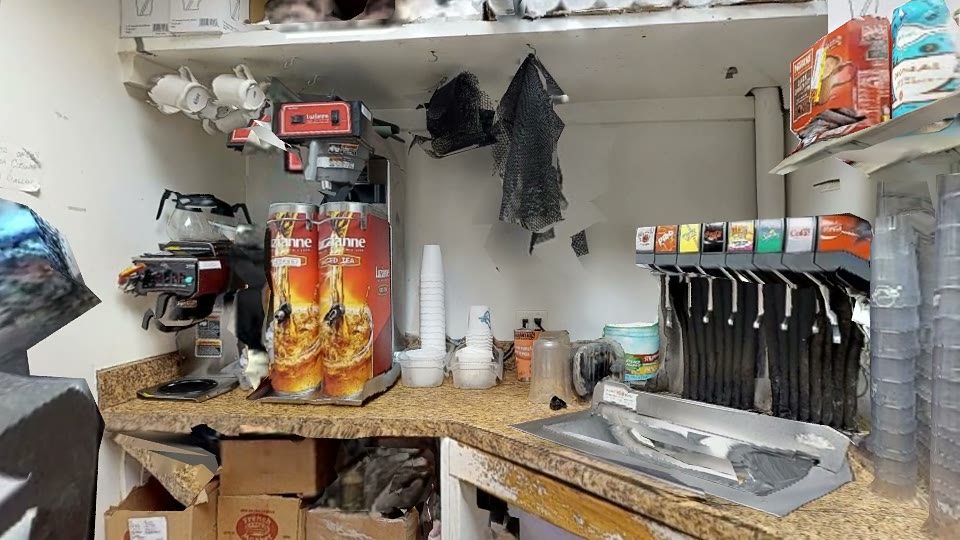
Defined workflow GPT-6 Astra · 5 s
Actual defined-workflow restaurant inspection render at 5 seconds.
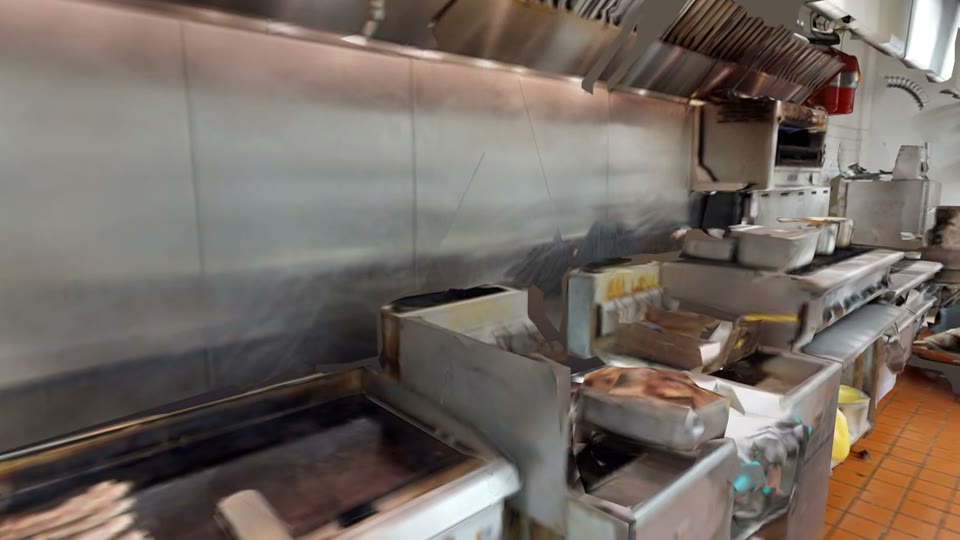
Agent-directed GPT-6 Astra · 25 s
Actual agent-directed restaurant inspection render at 25 seconds, showing food-preparation equipment.

The same request“Create a virtual drone tour for a food safety inspector…”

Selected frames from real runs; different timestamps.

01 / The idea

Give intent a path
into the physical world.

A language model can decide what matters in a scene. ACDC gives that decision an execution harness: posed exploration frames, rendered feedback, and motion planning grounded in geometry.

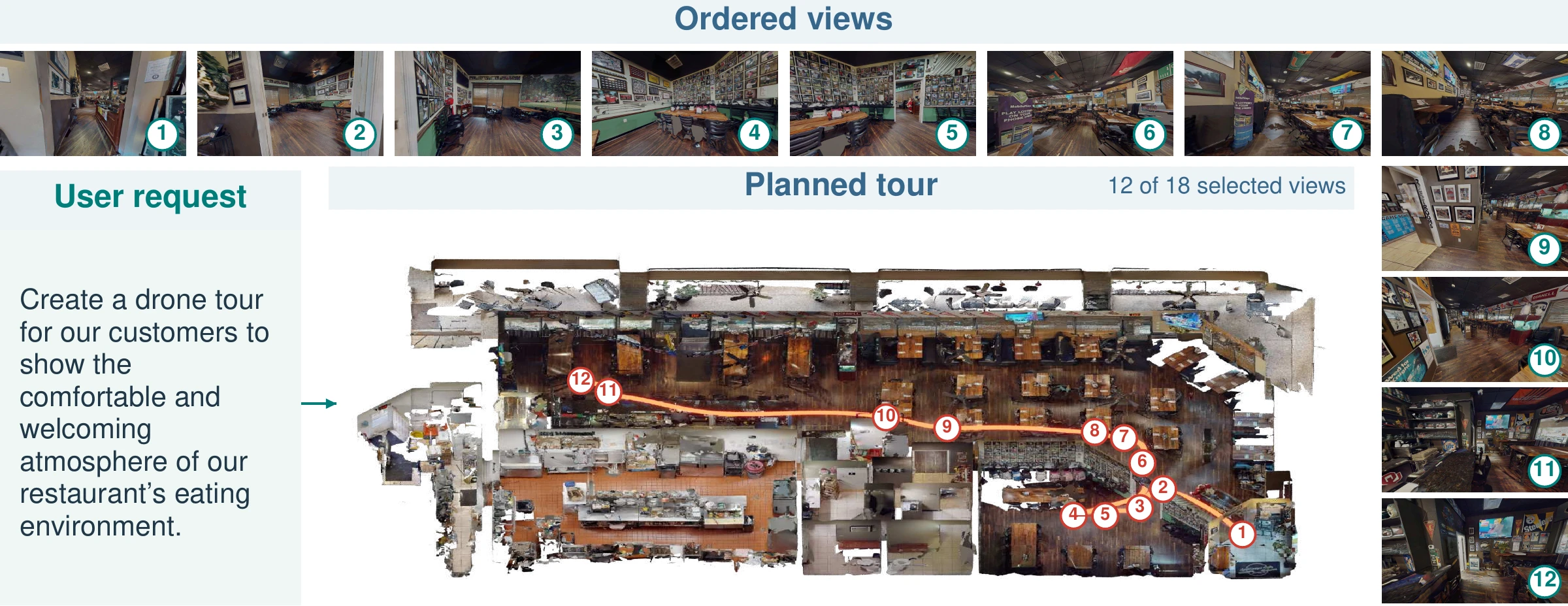
Figure 1: a request for a welcoming restaurant tour becomes an ordered set of camera viewpoints and a red flight path through the mapped restaurant. Twelve of the 18 selected views are numbered around the scene.

Inputs to ACDC

The tours on this website are generated from these three inputs.

Natural-language requestPosed exploration videoMapped 3D scene

Defined workflow

The sequence is prescribed.

The model works through three fixed stages.

  1. 01
    Select & order shotsTurn intent into descriptions; retrieve posed frames.
  2. 02
    Refine each viewpointCompare rendered alternatives with preference-based Bayesian optimization.
  3. 03
    Plan the flightA*, corridors, and TOGT connect the views; interpolate camera yaw.

Agent-directed workflow

The agent chooses the next step.

After inspecting the result, the agent can revise the route, camera direction, timing, and tools.

Plan & choose tools↓Render & check↓Accept or revise ↻

02 / Explore real runs

Same model. Same request.
Watch what changes.

1 · Scene

2 · Model

3 · Prompt

Restaurant · Food inspection · GPT-6 Astra

Prompt

“Create a virtual drone tour for a food safety inspector, showing that our restaurant maintains a highly sanitary food processing environment.”

Defined workflow

Agent-directed

0%

Original playback speed. Scrubbing aligns tour progress, not matching views.

Selected run statistics
MetricDefined workflowAgent-directed
Duration62.0 s123.8 s
Peak sampled speed0.999 m/s0.860 m/s
Speed-limit episodes00

How the camera moves

Speed calculated from actual trajectory CSVs. Dashed line: 1 m/s limit.

Run context & limitations +

Defined workflow

Agent-directed

Rendered scans contain holes, clutter, and incomplete surfaces. A food-inspection tour demonstrates content selection; it cannot establish sanitation. Clearance checks differ between implementations and should not be treated as a common safety benchmark.

03 / Measured across the runs

Freedom to revise.
Results you can inspect.

Speed-limit episodes count excursions above 1 m/s.

Defined workflow2.46

speed-limit episodes per tour

Agent-directed0.00

speed-limit episodes per tour

24 runs per workflow

Four models × six tasks. Computed from the final trajectories.

Below the speed limit does not mean a tour is collision-free, complete, or aesthetically preferred.

Mean speed-limit episodes per tour · six tasks per model
ModelDefined workflowAgent-directed
GPT-6 Astra2.170.00
GPT-6 Sol1.670.00
Claude Opus 5.52.170.00
Claude Sonnet 5.53.830.00
Measurement method & experimental limits +

An episode is a contiguous sequence of sampled speeds strictly above 1 m/s. Speed is the norm of the finite-difference world-position derivative at the saved timestamps, without smoothing, gap merging, or a minimum episode length. These sampled diagnostics are not continuous-time certification.

The defined runs differ in fidelity: Opus reports 100 refinement comparisons per shot, Astra 20, Sol 3, and Sonnet 20–21. Some runs replace retrieval or reduce render quality. Agent-directed implementations also differ in planner, renderer, and clearance definition. This is a comparison of the supplied final runs, not a controlled, equal-budget ablation or a universal model ranking.

The videos are web-optimized encodes of the supplied finals, preserving resolution, frame rate, framing, and timing. Plots use the original CSVs, with extrema-preserving downsampling for display. Poster aggregates whose underlying evaluation files are absent are not used here.

04 / Visual preference refinement

Refine a view
through feedback.

Seven perturbed starting views. One reference. Watch the similarity rise as visual feedback guides refinement over 100 comparisons. The judge does not see the reference image.

Watch refinement unfold.

Seven initializations · 100 comparisons each

Mean similarity · seven runs1.000
Seven viewpoint refinement tracesCosine similarity to the reference rises over 100 VLM comparisons for seven perturbed initializations. Use the controls below to replay the curves or inspect one initialization.0.750.800.850.900.951.00020406080100Cosine similarity to reference ↑VLM comparisons

Similarity in image-embedding space; higher is closer to the reference.

Refinement view

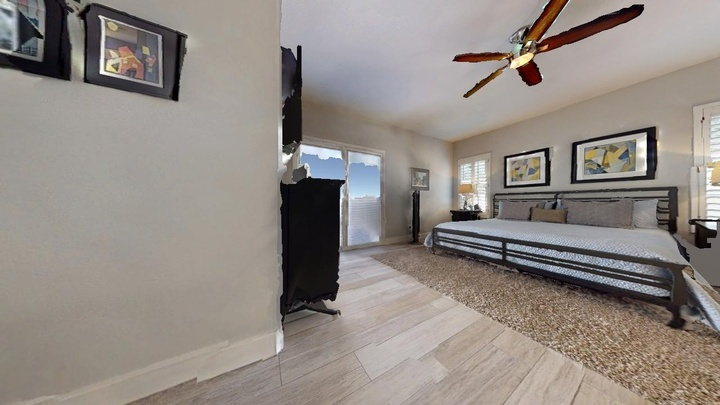
Original source image · 720 × 405 pixels

CoRL 2026 Workshop on Agentic Robotics

Agentic Aerial Cinematography

From Dialogue Cues to Cinematic Trajectories

Yifan Lin†*   Sophie Z. Liu*   Ran Qi*   George Z. Xue*
Xinping Song   Chao Qin   Hugh H.-T. Liu

University of Toronto

† Project lead · * Equal contribution (alphabetical order)

Research code forthcoming.